Review Your Growing Season Before Planning Next Year
The best time to plan next year’s vegetable garden is while this season is still fresh in your mind. Before choosing seeds or drawing a new bed plan, take a calm look at what grew well, what struggled, what your household actually used and how much work the garden demanded. A short, honest review now can prevent many of the same problems next year.
Why an end-of-season review matters
Memory is selective. By winter, a few successes and failures tend to dominate our view of the whole season. We may remember the tomatoes that struggled in the heat but forget the early peas that cropped well, or remember a pest outbreak without noting that the plants had already been weakened by drought.
A useful review is not about judging the garden. Every growing season is different, and some results are outside our control. The aim is to separate what can be improved from what simply reflects the weather, soil, pests or circumstances of that year.
Start while the evidence is still in the garden
Walk through each bed, row, container, greenhouse or protected space before everything is cleared. Take a few photographs and make short notes. You do not need a complicated spreadsheet. Record enough detail to answer three questions:
- What worked well enough to repeat?
- What should be changed?
- What is not worth growing again, at least for now?
Look at what produced, not simply what survived
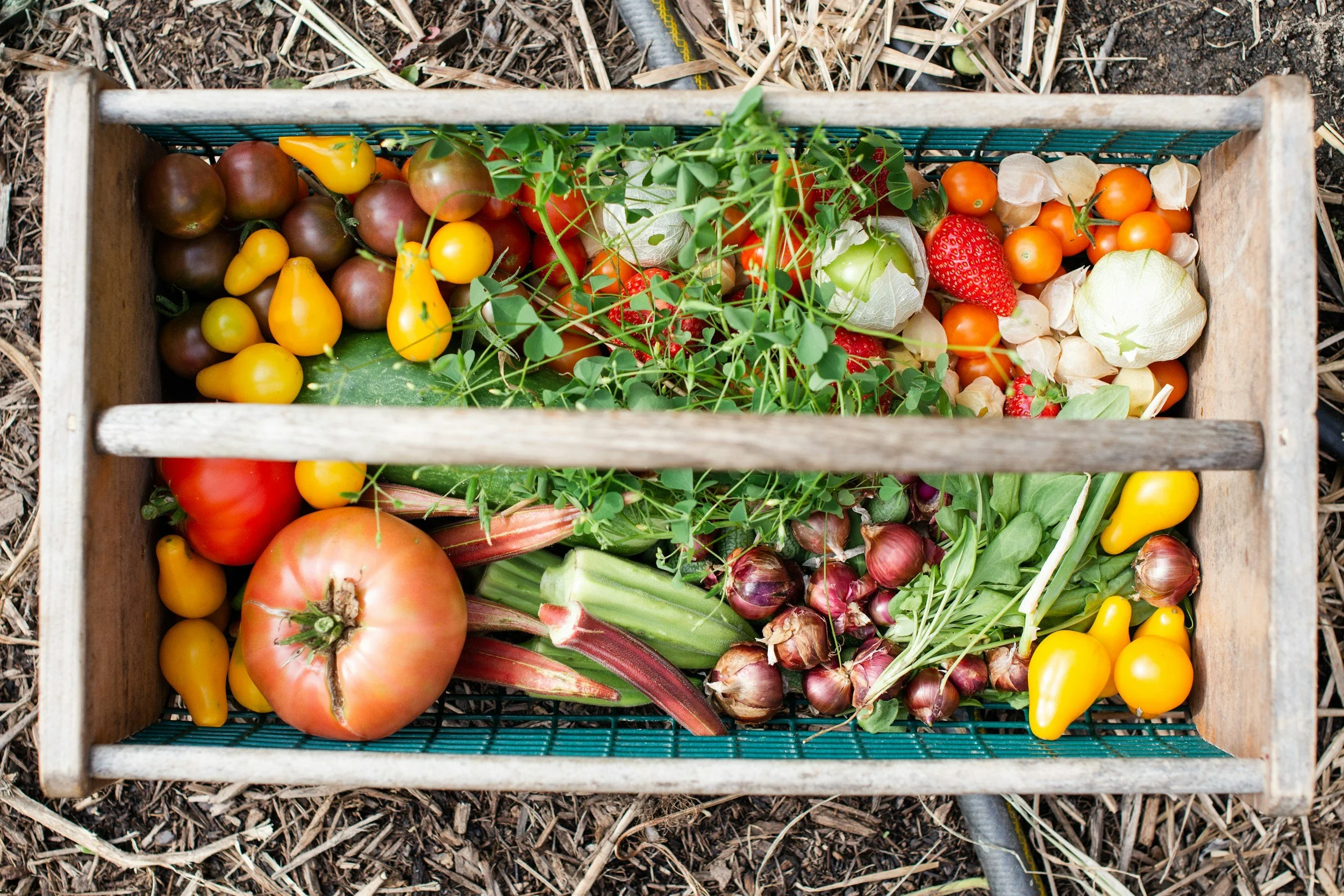
A healthy-looking plant is not always a useful crop. Think about the amount and quality of food each crop produced in relation to the space, water and attention it received.
For each main crop, consider:
- Did it produce a worthwhile harvest?
- Did the harvest arrive when it was most useful?
- Was the flavour good enough to justify growing it?
- Did you grow too much, too little or about the right amount?
- Did it occupy valuable space for a long time without producing much?
- Would a different variety, sowing date or position have improved the result?
This is especially helpful with large or long-season crops. A sprawling courgette, winter squash or tomato may earn its place through a generous harvest. Another may occupy the same space but give very little back. The review helps you decide which crops genuinely deserve room next year.
Review what your household actually used
Yield is only useful when the food is eaten, stored, preserved or shared. A large harvest can still represent poor planning if much of it becomes a burden.
Make a note of crops that disappeared quickly from the kitchen and those that accumulated. Did you have enough beans for regular meals? Were there more courgettes than anyone wanted? Did the onions last long enough? Were salad crops ready in one large rush and then absent for weeks?
These observations help answer two different questions: what should be grown, and how much should be grown. They also reveal where succession sowing may be more useful than increasing the total number of plants.
Separate weather problems from planning problems
A disappointing crop does not always mean it should be abandoned. Try to identify the main reason it struggled.
Weather and climate may include late frost, prolonged rain, drought, extreme heat, strong winds or an unusually short growing window.
Planning issues may include sowing too early or late, overcrowding, using the wrong space, planting too many crops at once or leaving too little time for a second crop.
Growing issues may include poor soil structure, irregular watering, weak transplants, unsuitable varieties, inadequate support, pests or disease.
Some problems overlap. Blossom drop in tomatoes, for example, may be linked to heat rather than feeding. Small roots may result from crowding, dry soil or sowing at the wrong time. The more clearly you describe the problem, the easier it becomes to make one sensible change next season.
Ask why the successful crops worked
Successful crops deserve the same attention as failures. It is easy to write “beans did well” and move on, but the reason matters.
Perhaps they were sown when the soil had warmed, grown where they received afternoon shade, watered deeply, protected when young or supported before they became tangled. Perhaps one variety coped better with local heat, cold or disease.
Record the conditions that helped. Repeating success is often more valuable than chasing a completely new technique.
Review timing as well as final harvests
Look back at the whole crop journey: sowing, germination, potting on, transplanting, flowering and harvesting. Note where delays or gaps appeared.
Were seedlings ready before outdoor conditions were suitable? Did transplants become root-bound? Was the main harvest later than expected? Did a bed remain empty because the next crop had not been sown? Did everything mature at the same time?
Timing notes become the foundation of next year’s sowing and transplanting plan. They are especially useful when working around frost dates, extreme summer heat or two distinct growing seasons.
Review the garden’s spaces
The garden itself may have revealed more than the crop list. Notice which areas dried fastest, remained shaded, caught the wind, flooded after heavy rain or stayed warm late into autumn.
Consider whether each crop was in the right place. A greenhouse may have been too hot for one crop but ideal for extending another. A sunny bed may have become difficult in midsummer, while a partly shaded space kept leafy crops productive for longer.
Also review paths, access, supports, water points and storage. A theoretically productive layout is not successful if it is awkward to water, harvest or maintain.
Include time, effort and enjoyment
A plan should fit the grower as well as the land. Be honest about the work involved. Which crops needed constant attention? Which jobs were repeatedly delayed? Which part of the garden became difficult to reach or maintain?
This is not an argument for growing less of everything. It is a reason to direct effort towards crops that are useful, enjoyable and suited to the garden. A slightly smaller, better-planned growing area can often produce more usable food with less waste and frustration.
Make four simple lists
At the end of the review, divide your notes into four lists:
- Grow again — reliable crops and varieties that earned their place.
- Grow differently — worthwhile crops that need a change of timing, variety, position, spacing or care.
- Grow less or more — quantities that did not match household needs.
- Do not grow next year — crops that were not enjoyed, were repeatedly unsuccessful or demanded more space and effort than they justified.
These lists turn a season of scattered observations into practical decisions.
Record the details before clearing the beds
Before crop labels disappear and the garden is put to bed, record the varieties, approximate quantities, sowing and transplanting times, growing locations and harvest results that will be useful next year. Photographs can preserve details that are difficult to describe.
If records were incomplete this season, do not let that stop the review. Begin with what you know. Even a few reliable notes are better than starting next spring from memory alone.
Move from review to next year’s plan
The review is complete when it produces a small number of clear actions. These might include sowing beans later, reducing courgette plants, giving tomatoes more shade, preparing a second sowing of beetroot, improving access to a bed or choosing an earlier variety.
The next step is to decide what deserves space next year, then work out realistic quantities, organise the growing area and build a sowing plan around the local climate.
Your Growing Companion can help if you prefer to keep this information together. Planting Log and Harvest Log preserve what was planted and what it produced; Seasons keep records connected to the correct growing year; and Plan What to Grow can turn your review into a practical starting plan. The records remain useful even when the final decisions are made on paper.
Continue planning your vegetable garden
Return to Planning Your Vegetable Garden for the full journey from autumn review and winter preparation to crop choices, growing spaces and sowing dates.
Useful next guides
Preparing the Vegetable Garden for Autumn and Winter
What to Do with Empty Vegetable Beds
How Many Vegetable Plants Do You Need?
When to Sow Seeds: Understanding Seasons and Your Climate